Evaluating Watercolor Fishing Lure Clipart for Creative Projects
Digital design resources have evolved significantly, offering creators a wide array of aesthetic options for both personal and commercial use. Among these niche collections, Watercolor Fishing Lure Clipart has emerged as a distinctive choice for designers, crafters, and hobbyists. This specific type of digital asset combines the rustic, organic appeal of angling equipment with the soft, artistic texture of watercolor painting. Understanding the technical specifications and practical applications of these files is essential for determining whether they align with your creative goals.
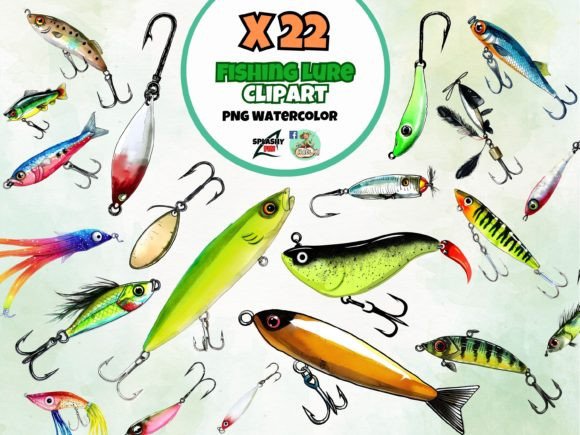
The collection in question features 22 high-resolution PNG files, each rendered with a transparent background. With dimensions of 4000 pixels on one side and a resolution of 300 DPI, these images are engineered for versatility. They serve not merely as decorative elements but as functional components in a broader design workflow. For individuals researching digital assets for fishing-themed projects, evaluating the balance between artistic style and technical utility is crucial.
Understanding the Aesthetic and Technical Value
Watercolor art is characterized by its fluidity, transparency, and soft edges. When applied to fishing lures—objects typically defined by hard plastics, metallic hooks, and vibrant synthetic colors—the result is a unique visual contrast. This style softens the industrial nature of fishing tackle, making it more approachable and suitable for decorative contexts. The watercolor aesthetic adds a layer of warmth and nostalgia, which is often missing from standard vector graphics or photographic stock images.
From a technical standpoint, the inclusion of a transparent background is a critical feature. It allows users to place the lure illustrations over any color, pattern, or photograph without the need for complex editing software to remove backgrounds manually. The 300 DPI (dots per inch) resolution ensures that the images remain sharp and detailed when printed. At 4000 pixels on the longest side, these files are large enough to support high-quality prints for posters, framed art, or large-format home decor, while still being manageable for digital screens.
Primary Use Cases and Audience Fit
Identifying the right application for these clipart files helps in assessing their value. The primary audience includes DIY enthusiasts, small business owners, and graphic designers working on niche projects. Here are several scenarios where this collection proves particularly effective:
- Personalized Gifts: Creating custom items for fishing enthusiasts, such as fathers’ day cards, birthday mugs, or personalized t-shirts. The artistic rendering makes the gift feel thoughtful and bespoke rather than generic.
- Home Decor: Designing wall art for cabins, lake houses, or man caves. The watercolor style blends well with rustic, coastal, or modern farmhouse interior design themes.
- Craft Projects: Utilizing the images for scrapbooking, sticker creation, or paper crafts. The transparent backgrounds simplify the process of layering images with other design elements.
- Small Business Branding: Fishing guides, bait shops, or outdoor apparel brands may use these illustrations for social media graphics, website headers, or packaging design to convey a friendly, artisanal brand identity.
For these users, the versatility of the PNG format is a significant advantage. Unlike JPEGs, which have white backgrounds, or SVGs, which are vector-based and may lack the textured depth of watercolor, PNGs offer a ready-to-use raster image that preserves the artistic integrity of the original painting.
Benefits and Practical Considerations
When evaluating digital clipart, several factors influence the decision-making process. The benefits of this specific collection include:
- High Resolution: The 300 DPI standard is ideal for print-on-demand services and professional printing. Users can scale the images down for web use without losing quality, though scaling up beyond the original pixel dimensions will result in pixelation.
- Time Efficiency: Pre-rendered watercolor effects save designers hours of work. Recreating the subtle blends and bleeds of watercolor digitally requires advanced skills and time. These cliparts provide an instant solution.
- Thematic Cohesion: Having a set of 22 consistent images ensures that various design elements within a project share a unified look and feel. This consistency is vital for professional-looking outputs.
However, there are tradeoffs to consider. Watercolor clipart, by nature, has softer edges and less precise detail than vector illustrations or high-definition photography. If a project requires exact anatomical accuracy of a specific lure model for technical identification, these artistic renditions may not be suitable. Additionally, while the transparent background is convenient, users must ensure their design software supports PNG transparency to avoid unintended white boxes around the images.
When to Choose Alternatives
While Watercolor Fishing Lure Clipart offers distinct advantages, it is not the optimal choice for every scenario. Understanding when to look for alternatives is part of making an informed decision.
If the goal is to create scalable logos that need to be resized from a business card to a billboard without any loss of quality, vector formats like SVG or AI are superior. Watercolor textures are difficult to replicate perfectly in vector format, so if the artistic style is non-negotiable, users may need to commission custom vector art, which is significantly more expensive.
Similarly, for educational materials or scientific publications where precise color matching and structural accuracy of fishing lures are required, photographic references or technical diagrams are more appropriate. The artistic interpretation inherent in watercolor may obscure specific details that are critical for identification purposes.
Making the Right Choice for Your Project
To determine if this clipart collection aligns with your needs, consider the end medium and the desired emotional tone. If the project aims to evoke feelings of relaxation, nostalgia, or appreciation for nature, the watercolor style is an excellent fit. It transforms functional fishing gear into art, appealing to a broader audience beyond just serious anglers.
Ensure that your workflow can accommodate raster images. Most modern design tools, including Canva, Adobe Photoshop, Procreate, and even Microsoft Word, support PNG files with transparency. However, if you are working exclusively in vector-based software like Adobe Illustrator, you may need to embed the PNGs, which can increase file size and limit editability.
In conclusion, Watercolor Fishing Lure Clipart represents a specialized resource that bridges the gap between hobbyist crafting and professional design. Its value lies in its high resolution, artistic charm, and ease of use. By carefully considering the project requirements, target audience, and technical constraints, creators can effectively leverage these assets to produce engaging and visually appealing content. Whether for a heartfelt gift or a commercial product, these illustrations offer a unique way to celebrate the passion for fishing through art.