Witch’s Apothecary Junk Journal Guide
Crafting is often described as a meditative practice, but for many, it is also an act of world-building. When you open a blank notebook or start a new digital canvas, you are not just arranging paper; you are curating an atmosphere. This is where the Witch’s Apothecary Junk Journal aesthetic finds its strongest foothold. It is not merely about spooky imagery; it is about capturing the tactile warmth of old spellbooks, the mystery of dried herbs, and the quiet power of celestial alignment.
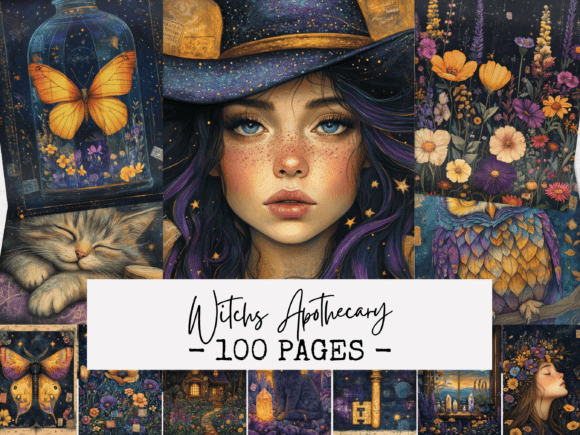
For creators navigating the vast sea of digital assets, finding a cohesive theme that offers both depth and versatility can be challenging. The This Witch’s Apothecary Junk Journal Paper Pack addresses this by providing 100 atmospheric pages inspired by potions, spellbooks, herbs, and dark mystical aesthetics. But beyond the visual appeal, understanding how these resources serve different creative needs is key to maximizing their value.
Defining the Aesthetic
Before diving into specific use cases, it helps to clarify what defines this style. Unlike generic vintage packs that might rely solely on faded florals or sepia tones, an apothecary-themed collection leans into the narrative of the alchemist or the hedge witch. You will find rich colors and layered textures that create visual depth. These elements include botanical illustrations, handwritten script reminiscent of grimoires, and symbols associated with tarot and astrology.
The utility of such a pack lies in its balance. While the imagery is specific, the design remains versatile enough for layering and mixed media projects. Whether you are working digitally or printing at home, the high-resolution JPG files ensure that the intricate details—from the veins of a leaf to the texture of aged parchment—remain crisp.
For the Beginner: Lowering the Barrier to Entry
If you are new to junk journaling, the prospect of creating a visually cohesive book from scratch can be intimidating. Beginners often struggle with color matching and composition. A curated pack like this serves as a training wheel system. Because the 100 pages are designed to work together, you do not need to worry about clashing patterns or inconsistent themes.
- Ease of Use: The instant digital download format means you can start immediately without waiting for shipping.
- Learning Value: By observing how the designer layers textures and integrates text with images, novices can learn fundamental design principles.
- Cost-Effectiveness: Compared to buying individual physical papers, a digital pack offers a lower cost per page, allowing beginners to experiment without financial risk.
A practical example for a beginner would be creating a simple "Moon Phase" tracker. Using the celestial symbols included in the pack, they can print specific pages, cut them into shapes, and glue them into a basic notebook. The pre-designed aesthetic ensures the final product looks professional even if the crafting skills are still developing.
For the Experienced Creator: Speed and Consistency
Professional artists and seasoned scrapbookers often face the bottleneck of asset creation. While they have the skills to draw or paint their own backgrounds, doing so for every project is time-prohibitive. For this audience, the Witch’s Apothecary Junk Journal resources function as a productivity tool.
Experienced users prioritize reliability and resolution. The high-quality JPGs provided in this pack are suitable for large-format printing, which is crucial for those who sell physical journals or create large-scale art pieces. Furthermore, the layered textures allow for advanced digital manipulation. A pro might take a background page, adjust the opacity in Photoshop, and overlay their own hand-lettered quotes, using the pack as a foundation rather than a final product.
This flexibility supports commercial workflows. If you are a freelancer working on a tight deadline for a client’s fantasy-themed brand guide or event invitation, having a library of ready-made, coherent assets can reduce production time by half.
Educators and Therapists: Facilitating Expression
The application of witchy aesthetics extends beyond hobbyist crafting. Educators and art therapists may find value in the symbolic nature of the content. Jungian psychology, for instance, often utilizes archetypes and symbols to help individuals process emotions. The imagery of potions, keys, and locked books can serve as powerful prompts for journaling exercises.
For a teacher leading a creative writing workshop, these pages can be used as story starters. Students might select a page featuring a mysterious herb illustration and write a backstory for it. The tactile experience of handling printed paper with rich textures can also ground students who benefit from sensory engagement. In this context, the priority is not just artistic beauty, but the evocative power of the visuals to spark imagination and introspection.
Small Business Owners and Entrepreneurs
For small business owners in the handmade sector, branding is everything. If your shop specializes in witchcore aesthetics, crystal selling, or tarot readings, your packaging and marketing materials must reflect that identity. This paper pack offers a cohesive visual language that can be extended to business cards, thank-you notes, and social media graphics.
Consider a small business owner who sells handmade candles. They can print the apothecary-themed labels to wrap around their jars, creating a unified unboxing experience. The digital nature of the product means they can print exactly what they need, when they need it, reducing waste and inventory costs. However, entrepreneurs must always check licensing terms for commercial use, though most digital paper packs allow for use in physical end-products.
Hobbyists and Collectors: The Joy of Curation
For many, the joy of junk journaling is in the hunt and the curation. Hobbyists often enjoy the process of sorting through hundreds of images to find the perfect fit. A 100-page pack provides a substantial playground for this activity. It allows for the creation of themed sections within a larger journal, such as a "Herbalism" chapter or a "Dream Log."
These users often value the variety within the pack. The inclusion of diverse elements—such as dark mystical aesthetics alongside lighter celestial symbols—ensures that the journal does not become monotonous. It supports year-round use, as the themes are not tied to a specific holiday like Halloween, but rather to a perpetual sense of wonder and mystery.
Making the Right Choice for Your Project
When evaluating whether this specific pack matches your goals, consider your primary objective. Are you looking for speed, learning, or therapeutic expression?
- Assess Your Medium: If you work primarily digitally, ensure your software can handle high-resolution JPGs. If you prefer physical crafting, verify your printer’s capability to handle the paper weight you intend to use.
- Define Your Scope: For a single shadow book, 100 pages may be more than enough. For a series of journals, you might want to combine this pack with other complementary themes.
- Check Your Skill Level: Beginners should look for packs that offer complete scenes, while advanced users might prefer element-heavy packs that allow for extensive customization.
The Witch’s Apothecary Junk Journal concept thrives on its ability to adapt. It is not just a collection of images; it is a toolkit for storytelling. Whether you are a marketer designing a campaign, a teacher facilitating creativity, or a hobbyist documenting your dreams, the right resources can transform a simple project into a meaningful artifact. By understanding your own priorities—be it ease of use, quality, or creative freedom—you can determine if this atmospheric collection is the missing ingredient in your next creative endeavor.